
Call us now :07313725950
 Send Inquiry
 Send Inquiry
Monel Sheets
Monel Sheets Specification
- Feature
- Corrosion resistant, high strength, excellent weldability
- Product Type
- Monel Sheets
- Shape
- Rectangular/Flat Sheet
- Weight
- Custom as per size, typically 2 kg to 200 kg per sheet
- Dimension (L*W*H)
- Available in standard or customized sizes, typical thickness: 0.5 mm to 50 mm
- Density
- 8.8 Gram per cubic centimeter(g/cm3)
- Grade
- Monel 400, Monel K500
- Application
- Chemical processing, marine engineering, oil & gas, aerospace, heat exchangers
- Color
- Silver Grey
- Yield Strength
- 170 MPa (min)
- Hardness
- Rockwell B75 - B90
- Surface Treatment
- Pickled, Annealed
- Standard
- ASTM B127, ASME SB127
- Tensile Strength
- 480 MPa (min)
- Finish
- Hot rolled, Cold rolled, Polished
- Thermal Conductivity
- 21.8 W/mK at 20C
- Elongation
- 35% (min)
- Melting Point
- 1300-1350C
- Packaging
- Export standard wooden case or as required
Monel Sheets About
Monel Sheets / Plates
Types of Monel : MONEL K-500 sheet
Specifications
Available standard; ASTM B 865,AMS 4676, ASTM B164 monel sheets
High quality assured.
chemical composition of monel alloy K500
Element
Content,%
Ni
63.0min
Cu
27min~33max
Fe
2.0max
Mn
1.5max
C
0.25max
Si
0.5max
AI
2.3min-3.15max
Ta
0.35min~0.85max
S
0.01max
Tensile strength;ksi:90-200,MPa:621-1379
Yield strength (0.2%offset): ksi:40-160,MPa:172-1103.
Elongation rate(%):40-2.
Available standard; ASTM B 865,AMS 4676
Application: Chemical and petrochemical industry as well as the ocean development.
monel 400 sheet
Chemical composion
Grade
Chemical composion/%
Ni+Co
Mn
Cu
Fe
C
Si
S
Monel 400 NCu30(NW4400, UNS N04400)
63.0
2.0
28.0~34.0
2.5
0.30
0.5
0.024
monel 400 sheet,specification and manufacture ability
Grade
make
state
specification(T*W*L)/mm
Monel 400 NCu 28-2.5-1.5
NCu30(NW4400,UNS N04400)
Hot rolled
Hot working state(R)
soft state(M)
(4.1~50.0)X(300~3000)X
(500~4500 )
Cold rolled
Cold working(H)state(Y)semi hard state(Y)
soft state(M)
(0.3~4.0) X (300~1000)X
(500 ~ 4000)
Superior Corrosion Resistance
Monel sheets offer exceptional protection against rust and corrosive chemicals, making them indispensable for harsh environments like chemical plants and marine applications. Their ability to withstand acidic and saline conditions contributes to longevity and reduced maintenance costs.
Versatile Applications Across Industries
With high tensile strength and outstanding weldability, Monel sheets are extensively used in chemical processing, oil and gas industries, aerospace engineering, marine infrastructure, and heat exchangers. Their adaptability enables use in both standard and custom designs for demanding operational conditions.
Customizable Sizing and Finishing Options
Monel sheets can be manufactured in standard or custom thicknesses (0.5 mm to 50 mm) and dimensions, with finishes including hot rolled, cold rolled, and polished. These options are complemented by tailored surface treatments like pickling and annealing, ensuring compatibility with specific project requirements.
FAQs of Monel Sheets:
Q: How are Monel Sheets processed to ensure durability and corrosion resistance?
A: Monel Sheets undergo processes such as hot or cold rolling, pickling, and annealing, which enhance their mechanical strength and surface quality. These steps ensure the sheets meet ASTM B127 and ASME SB127 standards and maximize corrosion resistance for demanding industrial environments.Q: What industries typically utilize Monel Sheets and why?
A: Monel Sheets are commonly used in chemical processing, marine engineering, oil and gas, aerospace, and heat exchangers. They are favored for their superior corrosion resistance, high strength, and reliable performance in environments exposed to acids, saline water, and high temperatures.Q: When should Monel 400 or Monel K500 grades be selected for a project?
A: Monel 400 is ideal for general corrosion resistance and weldability, while Monel K500 offers enhanced strength and hardness due to its age-hardened features. Grade selection depends on specific application requirements such as mechanical performance and resistance to stress.Q: Where can Monel Sheets be supplied and in what packaging options?
A: Monel Sheets are distributed, exported, imported, and supplied across India and globally. They are securely packaged in export-standard wooden cases or custom packaging as required to ensure safe transportation and delivery to project sites.Q: What benefits do Monel Sheets offer compared to other alloy sheet materials?
A: Monel Sheets provide exceptional resistance to corrosion, higher tensile strength (480 MPa min.), reliable performance in extreme environments, and excellent weldability. Their high thermal conductivity makes them ideal for heat-exchanger applications, setting them apart from many conventional alloys.Q: Can Monel Sheets be customized in terms of size, shape, and weight?
A: Yes, Monel Sheets can be tailored to meet precise project needs, with standard and custom dimensions, shapes (rectangular, flat, or other), and weights ranging from 2 kg to 200 kg per sheet. This flexibility is ideal for complex engineering requirements.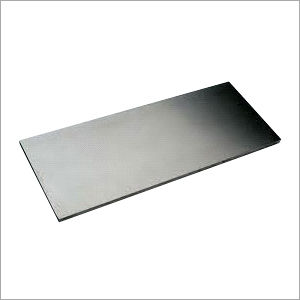
Tell us about your requirement

Price:
Quantity
Select Unit
- 50
- 100
- 200
- 250
- 500
- 1000+
Additional detail
Mobile number
Email

More Products in Nickel Based Products Category
Pure Nickel Pipes
Shape : CustomizedOother, Round Pipes
Product Type : Other, Pure Nickel Pipes
Density : 8.9 Gram per cubic centimeter(g/cm3)
Purity : 99.6% minimum
Application : Other
Grade : Nickel 200 / Nickel 201
Nickel Strip
Shape : CustomizedOother, Rectangular Strip
Product Type : Other, Nickel Strip
Density : 8.9 Gram per cubic centimeter(g/cm3)
Purity : 99.6% min
Application : Other, Battery tabs, Spot welding, Battery packs, Electrical, Electronics, Plating, and Industrial uses
Grade : Nickel 200/201
Hastalloy C-276 (Alloy C-276)
Shape : CustomizedOother, Round, Square, Rectangular, Custom
Product Type : Other, Alloy Sheet / Plate / Bar / Pipe / Tube / Fittings
Density : 8.89 Gram per cubic centimeter(g/cm3)
Purity : High Purity, Industrial Grade
Application : Other, Chemical Processing, Pollution Control, Power Generation, Pharmaceutical, Pulp and Paper, Waste Treatment, Marine
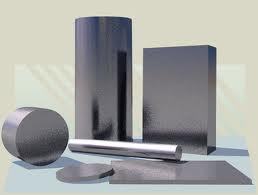
Nickel Sheets
Shape : CustomizedOother, Sheet
Product Type : Other, Nickel Sheets
Density : 8.9 Gram per cubic centimeter(g/cm3)
Purity : 99.6% min
Application : Other, Chemical Processing, Electroplating, Battery Manufacturing, Electronics, Aerospace
Grade : Nickel 200/201

 Send Inquiry
Our Products
- Metal Powder
- Nickel Based Products
- Tungsten Sheets
- Titanium Sheets & Plates
- Inconel Products
- Monel Alloy Products
- Electric Circuit Breaker
- Vacuum Circuit Breaker
- Load Break Switch
- Load Break Switch Panel
- Off Load Isolator
- Aluminium Copper Bimetal
- Nickel Silver Strips
- Beryllium Copper Strips
- Silver Brazing Alloy Products
- Silver Bearing Copper Commutator Segments
- Metals Sheets, Pipes & Rods
- Copper products
- Hot Rolled Copper
- Molybdenum Rods & Sheets
- Alloy Products
- Sintered Metal Bearings
- Industrial Virgin Metals
- Electrical Terminals
- Silver Copper Bimetal Rivets
- Electric Control Panel Accessories
- Brass Cable Glands
- Electrolytic Grade Wirebars
- L.T Control Switches
- Heavy Duty On Load Changeover Switches
- Hastelloy Products
- Vacuum Contactor
- Unitized Substation
- Low Voltage Electrical Panels
- Vacuum Circuit Breaker Panel
- Ring Main Unit (RMU)


No. - 12, Bhavani Bhuvan, 2nd Floor, 18/20 Popatwadi, Kalbadevi Road,Mumbai - 400002, Maharashtra, India

Mr. Dinesh
(Proprietor)
Mobile :07313725950
 Send Inquiry
 Send SMS
Developed and Managed by Infocom Network Private Limited.
