
Call us now :07313725950
 Send Inquiry
 Send Inquiry
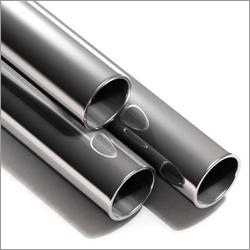
Pure Nickel Pipes
Pure Nickel Pipes Specification
- Feature
- High Corrosion Resistance, Excellent Electrical Conductivity
- Product Type
- Pure Nickel Pipes
- Material
- Nickel
- Shape
- Round Pipes
- Chemical Composition
- Ni 99.6%
- Purity
- 99.6% minimum
- Weight
- Varies as per size and length
- Dimension (L*W*H)
- Custom/Standard Sizes
- Density
- 8.9 Gram per cubic centimeter(g/cm3)
- Grade
- Nickel 200 / Nickel 201
- Application
- Other
- Color
- Silver Gray Metallic
Pure Nickel Pipes About
Pure Nickel Pipes
With the aid of our widespread distribution network, we are competent to bring forth an exclusive array of Pure Nickel Pipes. These products find huge usage in different industries such as chemical, foundries, electroplating, steel, castings and tools manufacturing. In the market, our offered Pure Nickel Pipes are well recognized by the customers for their salient features such as high durability, excellent tensile strength and resistance to corrosion & abrasion.
Further Details:
Commercially pure nickel with good mechanical properties and excellent resistance to many corrosive media. Important characteristics are its magnetic and magnetostrictive properties, the high thermal and electrical conductivity at low gas content.
Superior Corrosion Resistance
Nickel pipes exhibit exceptional resistance to corrosive agents, making them a reliable choice for harsh industrial environments, especially in chemical and petrochemical processing. Their inherent durability ensures a longer lifespan, even in the presence of aggressive chemicals, which reduces maintenance needs and overall operational costs over time.
Adaptable Customization and Sizing
Customers can request Pure Nickel Pipes in a wide array of dimensions, shapes, and weights to fit their unique project requirements. Whether you need standard sizes or customized shapes like round pipes or other geometries, these pipes are fabricated to precise specifications, ensuring seamless integration into any application.
Preferred in Critical Industries
With features like excellent electrical conductivity and high purity, Nickel 200 and 201 pipes serve vital roles in industries such as power generation, electronics, chemical processing, and petrochemicals. Their performance reliability under high-stress conditions makes them a preferred material choice for businesses seeking consistent quality and dependability.
FAQs of Pure Nickel Pipes:
Q: How are Pure Nickel Pipes utilized in chemical processing industries?
A: Pure Nickel Pipes are commonly used in chemical processing due to their high corrosion resistance and ability to withstand aggressive chemicals. They provide safe transport for corrosive liquids and gases, ensuring process integrity and equipment longevity.Q: What benefits does a 99.6% minimum purity offer for nickel pipes?
A: A high purity level of at least 99.6% ensures excellent corrosion resistance, improved electrical conductivity, and minimal impurities. This makes Pure Nickel Pipes especially suitable for sensitive applications in electronics, chemical processing, and power generation.Q: When is it advisable to select Nickel 200 or Nickel 201 grade pipes?
A: Nickel 200 is recommended for general corrosion resistance and mechanical strength, while Nickel 201, with lower carbon content, is suited for applications where resistance to graphitization at higher temperatures is crucial. The choice depends on the specific operational environment and requirements.Q: Where are your Pure Nickel Pipes supplied or exported from?
A: We distribute, export, import, and supply Pure Nickel Pipes throughout India, catering to local and international clients in various industries, ensuring prompt delivery and comprehensive support regardless of your location.Q: What is the process for ordering customized shapes and sizes of nickel pipes?
A: Clients can specify their desired dimensions, shapes, and grades when placing an order. Our production team fabricates pipes to these precise requirements, ensuring the end product matches your projects needs, whether its custom shapes or standard round pipes.Q: How does high electrical conductivity benefit the use of nickel pipes in electronics?
A: The excellent electrical conductivity of Pure Nickel Pipes makes them ideal for use in electronic components, battery manufacturing, and other applications where efficient current transfer and minimal energy loss are essential.Q: What are the main advantages of using Pure Nickel Pipes over other materials?
A: Compared to other metals, pure nickel offers superior corrosion resistance, enhanced durability, high purity, and excellent electrical properties. These benefits reduce long-term maintenance and replacement costs, making it a cost-effective choice for critical industrial applications.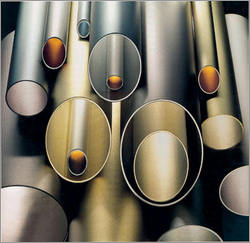
Tell us about your requirement

Price:
Quantity
Select Unit
- 50
- 100
- 200
- 250
- 500
- 1000+
Additional detail
Mobile number
Email

More Products in Nickel Based Products Category
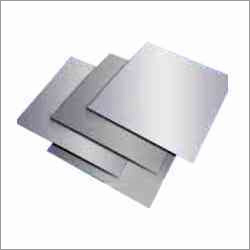
Nickel Strip
Color : Silvery Grey
Product Type : Other, Nickel Strip
Purity : 99.6% min
Shape : CustomizedOother, Rectangular Strip
Weight : Customized as per order
Density : 8.9 Gram per cubic centimeter(g/cm3)
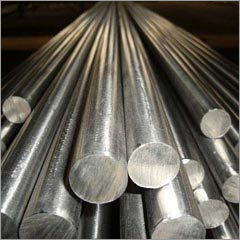
Inconel 625 (Alloy 625)
Color : Silver / Metallic Grey
Product Type : Other, Alloy Sheet / Plate / Bar / Pipe / Tube / Wire (various forms available as per requirement)
Purity : High purity (industrial grade alloy, typical purity >99%)
Shape : CustomizedOother, Sheet, Plate, Bar, Pipe, Tube, Wire, Round, Strip (various shapes)
Weight : Varies by dimension and form; custom as per order
Density : 8.44 Gram per cubic centimeter(g/cm3)
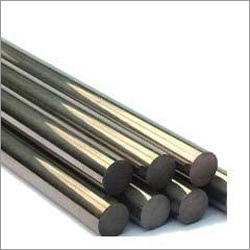
Incolloy 800 (H) (Alloy 800 H)
Color : Metallic Silver
Product Type : Other, Industrial Metal Alloy
Purity : 99%
Shape : CustomizedOother, Round Bar / Rod
Weight : Depends on dimensions; customizable as per order
Density : 7.94 Gram per cubic centimeter(g/cm3)
Hastalloy C-276 (Alloy C-276)
Color : Metallic Silver
Product Type : Other, Alloy Sheet / Plate / Bar / Pipe / Tube / Fittings
Purity : High Purity, Industrial Grade
Shape : CustomizedOother, Round, Square, Rectangular, Custom
Weight : As per size and form (Customized)
Density : 8.89 Gram per cubic centimeter(g/cm3)

 Send Inquiry
Our Products
- Metal Powder
- Nickel Based Products
- Tungsten Sheets
- Titanium Sheets & Plates
- Inconel Products
- Monel Alloy Products
- Electric Circuit Breaker
- Vacuum Circuit Breaker
- Load Break Switch
- Load Break Switch Panel
- Off Load Isolator
- Aluminium Copper Bimetal
- Nickel Silver Strips
- Beryllium Copper Strips
- Silver Brazing Alloy Products
- Silver Bearing Copper Commutator Segments
- Metals Sheets, Pipes & Rods
- Copper products
- Hot Rolled Copper
- Molybdenum Rods & Sheets
- Alloy Products
- Sintered Metal Bearings
- Industrial Virgin Metals
- Electrical Terminals
- Silver Copper Bimetal Rivets
- Electric Control Panel Accessories
- Brass Cable Glands
- Electrolytic Grade Wirebars
- L.T Control Switches
- Heavy Duty On Load Changeover Switches
- Hastelloy Products
- Vacuum Contactor
- Unitized Substation
- Low Voltage Electrical Panels
- Vacuum Circuit Breaker Panel
- Ring Main Unit (RMU)


No. - 12, Bhavani Bhuvan, 2nd Floor, 18/20 Popatwadi, Kalbadevi Road,Mumbai - 400002, Maharashtra, India

Mr. Dinesh
(Proprietor)
Mobile :07313725950
 Send Inquiry
 Send SMS
Developed and Managed by Infocom Network Private Limited.
