
Call us now :07313725950
 Send Inquiry
 Send Inquiry
Sintered Porous Metal Bearings
Sintered Porous Metal Bearings Specification
- Product Type
- Sintered Porous Metal Bearings
- Shape
- Cylindrical (Bush Type and Flanged Type Available)
- Chemical Composition
- Copper 89%, Tin 11% (Bronze) or Iron 91%, Carbon 1%, Graphite 2%
- Purity
- 99%
- Grade
- SAE 841 / ISO 4385
- Application
- Electric Motors, Fans, Domestic Appliances, Automotive, Pumps, Machinery
- Noise Level
- Low, suitable for quiet operation
- Maximum PV Value
- 1.6 N/mm2m/s
- Lifespan
- Up to 50,000 working hours (subject to application)
- Static Load Capacity
- 100N/mm2
- Maximum Sliding Velocity
- 2.5 m/s
- Dynamic Load Capacity
- 40N/mm2
- Tolerance
- ID: H7, OD: S7 Standard
Sintered Porous Metal Bearings About
Sintered Porous Metal Bearings are powder metallurgical parts, the starting materials are obviously metal powder. The metal powder used are specifically produced to give flow and compacting characterristics and at the same time ensure best mechanical strength, grade or porosity for oil retention and self lubrication in its finished form.Sequence of production:
Forming ( or compacting), Sintering, Sizimg, Oil Impergnation
Materials : Sintered bronze / Iron sintered ad per IS : 3980 : 1982
Range : Plain & Flanged Bushes, Self aligned Bushes, Solid Rod, Plate & different profile components as per drawings / samples.
Application :
- Sintered Bronze Bushes are used for high Speed application ( upto 18000 rpm )
- Iron Sintered bushed are for speed ( upto 3000 rpm).
Materials Composition :
| Grade I, Copper Base | ||||
| Elements | Class A % | B3% | B2 % | B1% |
| Iron ( Fe ) | 1.00 mAX | 48-50 | 38-40 | 28-30 |
| Tin ( Sn) | 8-9.5 | 4-6 | 4-6 | 4-6 |
| Carbon ( C ) | 2.0 mAX. | 2.0 | 2.0 | 2.0 |
| Impurities | 2.0 | 2.0 | 2.0 | 2.0 |
| Copper ( Cu ) | BAL | BAL | BAL | BAL |
| Grade II, Iron Base | ||||
| Elements | CLASS A % | B3 % | B2 % | B1% |
| Copper ( Cu ) | 1.00 Max | 9-11 | 4-6 | 1.5-3.5 |
| Carbon ( C) | 0.25 Max | 0.25 | 0.25 | 0.25 |
| Impurities | 2.0 | 2.0 | 2.0 | 2.0 |
| Iron( Fe ) | BAL. | BAL. | BAL. | BAL. |
Superior Performance for Quiet Environments
Designed for low noise operation, these sintered porous bearings enable quiet and efficient function in a range of devices. Their optimized chemical composition and precise tolerances assure both longevity and consistent performance, making them the preferred choice for applications demanding minimal sound disturbance.
Customizable Shapes and Robust Capacities
Choose from bush-type, flanged, or fully customized shapes to fit each unique need. With static load capacities up to 100 N/mm and dynamic support up to 40 N/mm, these bearings provide strength and adaptability for distributors, importers, exporters, suppliers, and traders across machinery and automotive domains.
FAQs of Sintered Porous Metal Bearings:
Q: How are sintered porous metal bearings installed in electric motors and fans?
A: Sintered porous metal bearings are typically press-fit or housed within the motor or fan assembly, aligned according to ID H7 and OD S7 tolerance standards to ensure optimal rotational stability and reduce vibration.Q: What is the primary benefit of using these bearings in domestic appliances?
A: Their low noise level and long lifespanup to 50,000 working hoursmake them ideal for domestic appliances where quiet operation and reduced maintenance are essential.Q: When should I consider bush-type versus flanged-type bearings for my machinery?
A: Bush-type bearings are suited for applications needing simple shaft support, while flanged-type bearings provide additional axial location and ease of mounting, especially when precise positioning is critical.Q: Where are these bearings commonly used in automotive and pump systems?
A: They are widely employed in rotating shafts, housing supports, and pump assemblies, offering reliable motion, wear resistance, and quiet operation in high-demand automotive and fluid transfer environments.Q: What process is used to ensure chemical purity and grade compliance?
A: Advanced powder metallurgy techniques are implemented to maintain alloy purity (99%) and adherence to SAE 841 / ISO 4385 specifications, ensuring consistent quality and high-grade performance.Q: How does the bearings maximum sliding velocity affect its suitability for high-speed applications?
A: A maximum sliding velocity of 2.5 m/s means these bearings efficiently handle moderate rotational speeds, making them suitable for standard electric motors, fans, and similar equipment without excessive wear or overheating.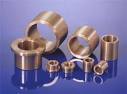
Tell us about your requirement

Price:
Quantity
Select Unit
- 50
- 100
- 200
- 250
- 500
- 1000+
Additional detail
Mobile number
Email

More Products in Sintered Metal Bearings Category
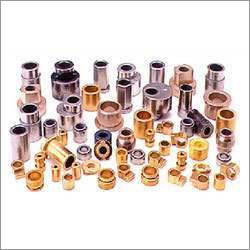
Sintered Metallurgical Parts
Density : 7.5 Gram per cubic centimeter(g/cm3)
Chemical Composition : Fe, Cu, Zn, C, Ni (as per requirement)
Feature : High strength, Wear resistance, Corrosion resistance, Precise tolerances
Application : Other
Dimension (L*W*H) : Customized, typically 10 mm 200 mm range
Product Type : Other, Sintered Metallurgical Parts

 Send Inquiry
Our Products
- Metal Powder
- Nickel Based Products
- Tungsten Sheets
- Titanium Sheets & Plates
- Inconel Products
- Monel Alloy Products
- Electric Circuit Breaker
- Vacuum Circuit Breaker
- Load Break Switch
- Load Break Switch Panel
- Off Load Isolator
- Aluminium Copper Bimetal
- Nickel Silver Strips
- Beryllium Copper Strips
- Silver Brazing Alloy Products
- Silver Bearing Copper Commutator Segments
- Metals Sheets, Pipes & Rods
- Copper products
- Hot Rolled Copper
- Molybdenum Rods & Sheets
- Alloy Products
- Sintered Metal Bearings
- Industrial Virgin Metals
- Electrical Terminals
- Silver Copper Bimetal Rivets
- Electric Control Panel Accessories
- Brass Cable Glands
- Electrolytic Grade Wirebars
- L.T Control Switches
- Heavy Duty On Load Changeover Switches
- Hastelloy Products
- Vacuum Contactor
- Unitized Substation
- Low Voltage Electrical Panels
- Vacuum Circuit Breaker Panel
- Ring Main Unit (RMU)


No. - 12, Bhavani Bhuvan, 2nd Floor, 18/20 Popatwadi, Kalbadevi Road,Mumbai - 400002, Maharashtra, India

Mr. Dinesh
(Proprietor)
Mobile :07313725950
 Send Inquiry
 Send SMS
 Call Me Free
Developed and Managed by Infocom Network Private Limited.
